Home › Asphalt Pathways, Sidewalks, and Trails
Precision Asphalt Atlanta installs asphalt pathway paving in Atlanta, GA for parks, campuses, apartment communities, and commercial sites. We build smooth sidewalks, multi use trails, and pedestrian routes that are comfortable and accessible. Our team designs alignment, grades, and tie ins to existing paths or parking areas. Create safe walking and biking connections with durable asphalt paths and trails.
Precision Asphalt Atlanta provides professional asphalt pathway paving throughout Atlanta, GA, Georgia and the surrounding area. Our licensed, insured crew delivers safe, clean, on-time work with a free estimate before anything begins. Call (470) 683-6069 or request your free quote.
Asphalt Pathways, Sidewalks, and Trails in Atlanta, GA
When you put people on foot, bikes, strollers, or golf carts on a surface, the details matter. At Precision Asphalt Atlanta, our focus with asphalt pathway paving is to build walks and trails that drain right, feel solid underfoot, and hold up to Atlanta’s heat and sudden storms.
We work on neighborhood walking paths, HOA sidewalks, park and greenway trails, school campuses, church grounds, and commercial sites that need safe, clean access between buildings and parking. Asphalt is often the best fit in Atlanta because it handles temperature swings better than many rigid surfaces and can be repaired or reconfigured without tearing everything out.
Instead of treating pathways like mini roads, we design them for how people actually use them. That means thinking about shade, nearby tree roots, slope, and how water will move during a hard Georgia thunderstorm. Our goal is to give you a pathway or trail that is comfortable to walk on, wheelchair friendly where required, and simple to maintain, without blowing the budget.
Planning and Design: Getting the Layout Right for Atlanta Conditions
Good asphalt pathway paving starts long before the first truck shows up. We begin with a site visit to walk the exact route with you. For Atlanta properties, we pay close attention to clay soils, existing trees, and how water currently runs after heavy rain. Those three things cause most problems if they are ignored.
We talk through width (4 to 6 feet is typical for residential and HOA paths, 8 to 12 feet for shared-use trails), planned users (pedestrians only, or bikes and carts too), and any ADA accessibility needs like ramp slopes and landings. For schools, parks, and medical offices, we check turning areas, cross slopes, and tie-in points to entrances and parking so there are no trip lips.
Our team marks drainage paths and low spots, then sets grades to keep water moving off the surface and into grass or drains within a few minutes after a storm. In Atlanta’s red clay, poor drainage means standing water, algae, and premature cracking. When trees are close to the proposed path, we either adjust the alignment or design a thicker base and possible root barrier so roots do not push the pavement up in a few years.
Before you approve anything, Precision Asphalt Atlanta provides a clear layout, thickness recommendations for base and asphalt, and a plan for transitions to existing sidewalks, curbs, or parking lots so everything fits together smoothly.
How Asphalt Pathway Paving Is Actually Built
Once the design is set, we move into construction. Precision Asphalt Atlanta does not skip base work, because that is where most pathway problems start.
First, we strip sod and organic material along the path or trail route and perform any minor excavation needed to reach stable subgrade. If we find soft spots or pumped clay, we undercut and replace those areas with compacted stone instead of building over weak soil.
Next, we install the stone base, usually 4 to 6 inches of graded aggregate for light-use pedestrian paths and 6 to 8 inches or more for shared-use trails that will see utility carts or light maintenance vehicles. The stone is spread, moisture conditioned if needed, and compacted with plate compactors and rollers until it is dense and stable. At this stage we fine-tune cross slope (usually 1.5 to 2 percent) so water sheds off the path.
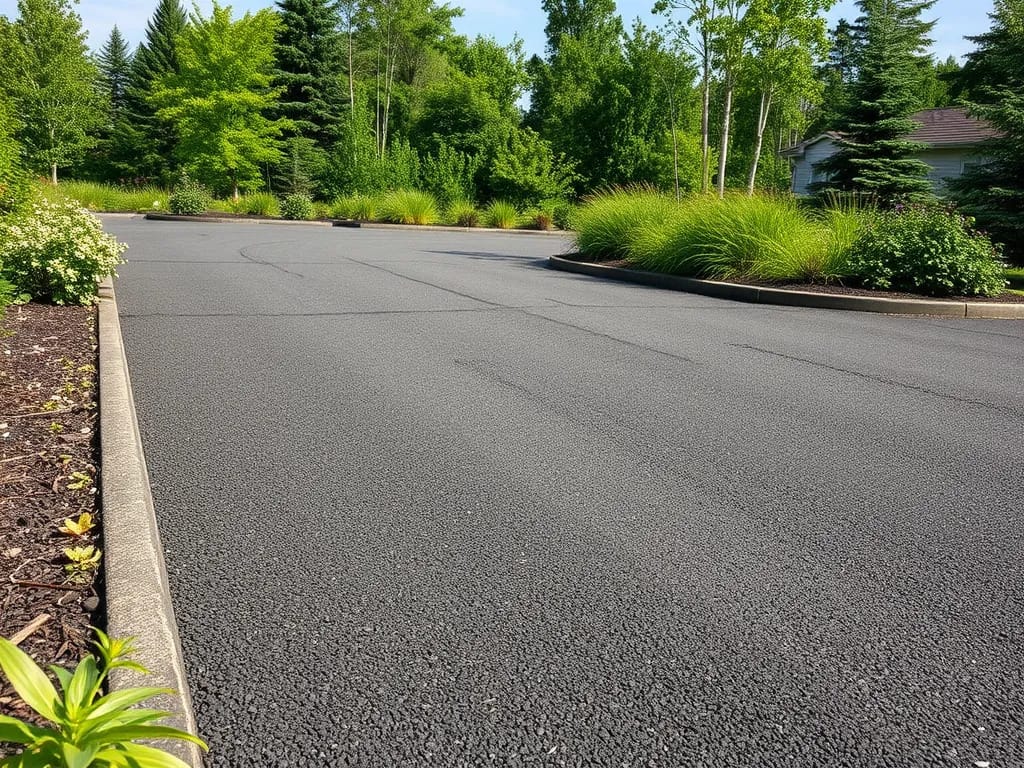
If your project requires edging, we can use asphalt berm, concrete ribbon, or tie into existing curbs. In landscaped settings like Atlanta neighborhoods and parks, this edging helps hold the asphalt in place and keeps mulch or soil from creeping onto the walking surface.
Then we place the hot mix asphalt. For most sidewalks and pedestrian pathways, we install 1.5 to 2 inches of surface mix over the base. For heavier use or small service vehicles, we may add a separate binder course underneath. The mix is laid with a small paver where access allows, or hand-placed and compacted in tighter areas, then rolled to a smooth finish that still has enough texture for good traction in wet weather.
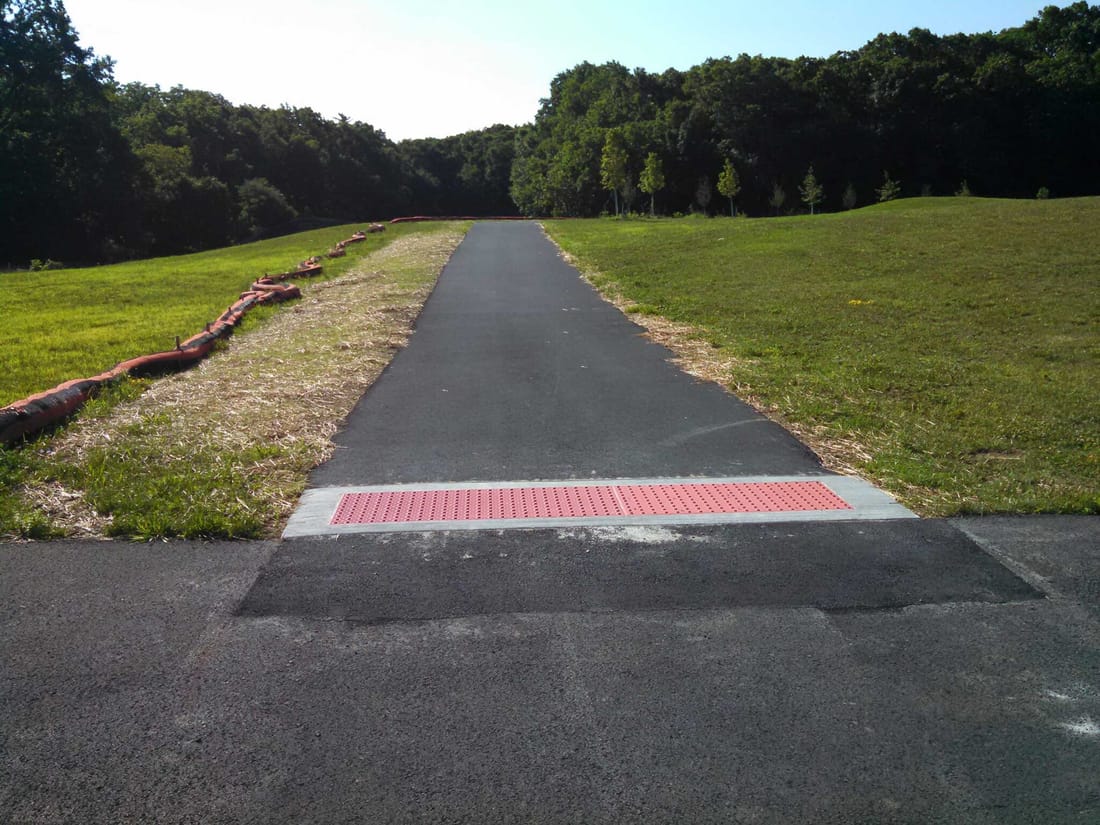
Finally, we handle clean tie-ins to existing concrete walks, ramps, or parking. We feather and compact these transitions so there are no abrupt edges that could cause trips or issues for wheelchairs or strollers.
Cost Drivers, Material Choices, and Common Atlanta Issues
Pathway and trail pricing in Atlanta depends on length, width, thickness of the base and asphalt, site access, and how much grading or tree-related work is involved. A straight run behind a subdivision with good truck access will cost less per foot than a winding park trail on a wooded hillside with no direct access for equipment.
Material thickness is a key factor. A narrow garden path for foot traffic only might use a lighter section, while a campus or park trail that sees maintenance carts will need a thicker base and asphalt course to avoid rutting. The asphalt mix itself can be adjusted, for example a finer mix for smoother walking or jogging surfaces, or slightly coarser aggregate for added skid resistance in shaded, often-damp areas.
In Atlanta, tree roots and water control are the main long-term issues. To limit root damage, Precision Asphalt Atlanta will either shift the path a few feet off major root zones, use selective root pruning with care, or put in thicker base and optional root barriers. For drainage, we often add shallow swales, spot drains, or small culverts at low crossings so water does not sit alongside or under the path.
We also discuss edging and surface color. Standard black asphalt is most common and cost-effective, but in some cases we can use additives or surface treatments to reduce heat absorption or give a slightly different appearance. Where pathways cross drive lanes or parking, we can apply striping or thermoplastic markings so drivers clearly see pedestrian routes.
Because Atlanta summers are hot, we also talk about realistic maintenance. Sealcoating is usually recommended for higher use trails after the surface has cured, and localized crack sealing can extend the life of the path without full replacement. We help you balance up-front investment and long-term upkeep instead of pushing the most expensive option every time.
What to Expect From Precision Asphalt Atlanta and How to Prepare
Our goal is to make pathway and trail projects predictable for property managers, HOAs, and owners. Before work starts, we provide a schedule that shows when we will excavate, place base, and pave, and how long each area will be closed. For schools, parks, and active communities in Atlanta, we often phase work so that at least one safe route stays open as much as possible.
We ask clients to mark private irrigation, lighting, and invisible dog fences since those are rarely on public utility locate tickets. Clearing the route of portable items, trimming low branches, and confirming where you want trash cans and benches helps keep the project moving and avoids last-minute changes.
During construction, Precision Asphalt Atlanta manages traffic control and temporary barricades around fresh asphalt so pedestrians or bikes do not track through soft material. In most Atlanta weather, pedestrian access can return to new asphalt within 24 hours, sometimes sooner, but we will give you specific timing based on conditions.
After completion, we walk the site with you to check slopes, transitions, and any drainage features in real conditions. We point out where to watch for runoff issues during the first serious storm and how to handle small problems early, such as cleaning blocked outlets or addressing minor edge washouts near steep slopes.
We also provide straightforward guidance on sweeping, snow and ice practices if needed, and when to plan for the first round of maintenance. With clear expectations and local experience, our aim is to give Atlanta property owners pathways, sidewalks, and trails that stay solid, safe, and good looking for many years.