Home › Parking Lot Repair & Replacement
Precision Asphalt Atlanta provides professional parking lot repair in Atlanta, GA, restoring safety and appearance for your customers and tenants. We repair potholes, failed areas, and broken edges, and when needed perform full asphalt replacement. Our crews work efficiently to limit downtime while delivering long lasting results. Keep your asphalt parking lot in top shape with targeted commercial repair and reconstruction services.
Precision Asphalt Atlanta provides professional parking lot repair throughout Atlanta, GA, Georgia and the surrounding area. Our licensed, insured crew delivers safe, clean, on-time work with a free estimate before anything begins. Call (470) 683-6069 or request your free quote.
Parking Lot Repair & Replacement in Atlanta, GA
A worn or failing parking lot does more than look bad. It creates trip hazards, potholes that can damage vehicles, drainage issues, and liability exposure. Precision Asphalt Atlanta focuses specifically on commercial and multifamily parking lot repair and full replacement in the Atlanta, GA area, so we understand how local traffic, heat, and rain affect your asphalt.
When we assess your lot, we do not guess. We walk and drive the property, probe soft spots, look at drainage patterns after storms, and consider how delivery trucks, garbage trucks, and customer traffic use each section. Based on what we find, we recommend targeted repairs, resurfacing, or full-depth replacement, not a one-size-fits-all solution.
Our goal is a parking lot that drains correctly, holds up to Atlanta traffic and weather, and stays safe and readable for drivers and pedestrians. We also plan work phases and access routes so your business can keep operating while repairs are underway.
How We Evaluate Your Existing Parking Lot
Every successful parking lot repair or replacement project starts with a thorough evaluation. Precision Asphalt Atlanta looks at four key factors: structure, surface, drainage, and use.
For structure, we core or cut into representative areas to see how thick the existing asphalt and base stone really are. Many older Atlanta lots were built thinner than current standards, which is a common reason they crack and rut early. For the surface, we document potholes, alligator cracking, raveling, and depressions, and we note where past patching has failed.
Drainage is a major concern in Georgia because of heavy thunderstorms. We check slopes, low spots that hold water, condition of catch basins, and whether water is running toward buildings instead of away. Standing water is one of the fastest ways to destroy asphalt. Finally, we factor in use: trash truck paths, loading zones, drive-thrus, and high-turn areas near entrances get very different stress than lightly used parking bays, so they may need a thicker section or different repair approach.
All of this information goes into a written scope and a site plan so you know exactly what we are recommending and why.
Targeted Parking Lot Repairs: Patching, Crack Sealing, and Overlay
If your asphalt still has a solid base and most of the surface is intact, targeted parking lot repair can extend its life for years at a lower cost than replacement.
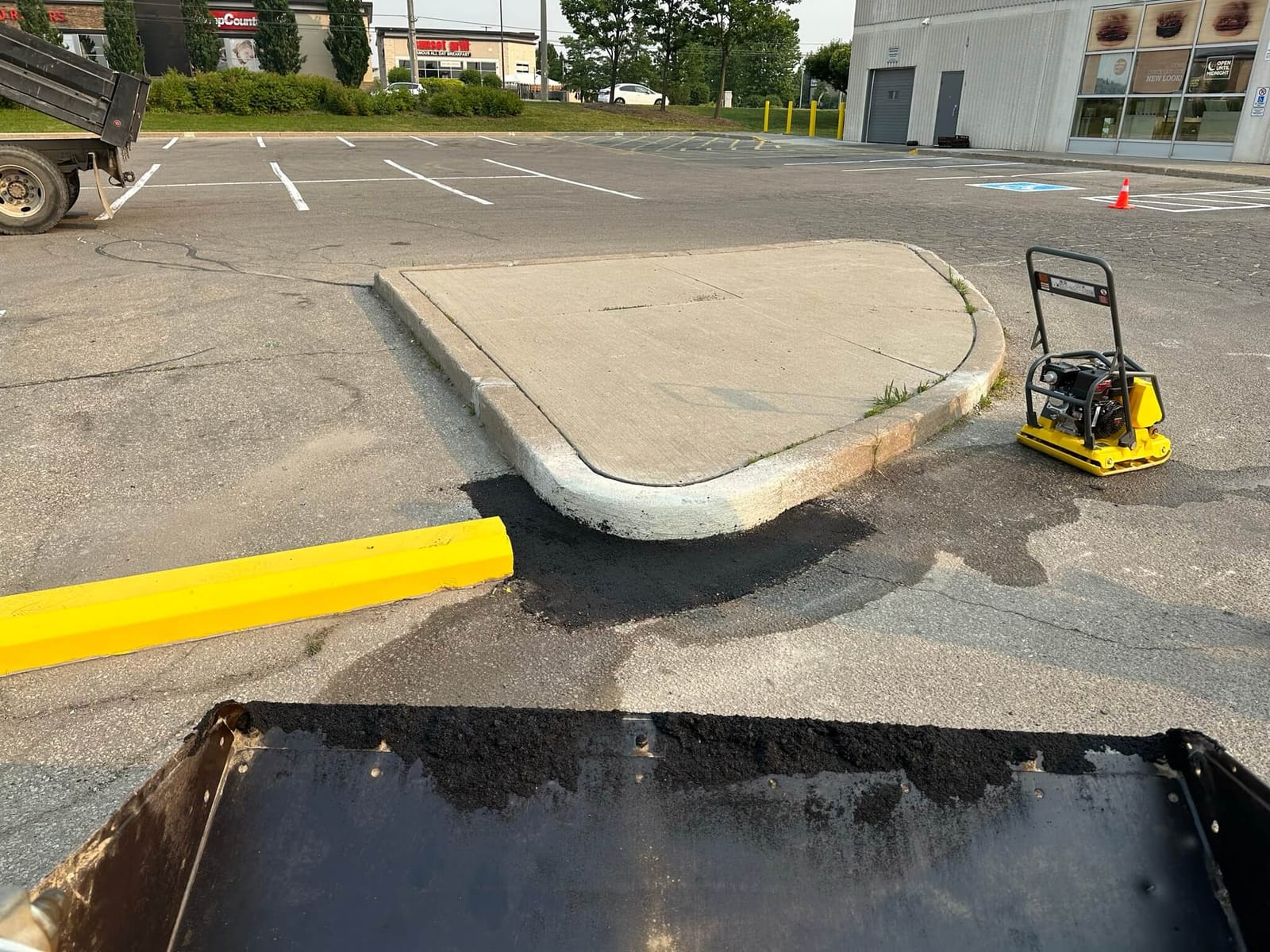
Pothole and failed area patching: We do not just throw new mix into a hole. We saw cut around the damaged area to create a clean edge, remove loose material down to a firm base or subgrade, install and compact new stone if needed, then place hot-mix asphalt in lifts and compact it with a vibratory plate or roller. On heavy-traffic lanes and dumpster pads, we increase patch thickness and sometimes reinforce the base to handle turning and point loads.
Crack sealing: Atlanta's temperature swings and traffic create expansion and contraction cracks. Left open, they let water into the base. We mechanically clean and dry cracks, then apply a hot rubberized crack sealant that stays flexible. This is especially important before winter cold snaps and before any resurfacing.
Asphalt overlay: When the base is sound but the surface is aged or lightly cracked, a 1.5 to 2 inch overlay can restore ride quality and appearance. Before overlaying, Precision Asphalt Atlanta mills (grinds) transitions at sidewalks, drains, and tie-in points so you do not end up with trip lips or drainage problems. We also level significant dips with scratch courses so the final surface drains properly.
Full Parking Lot Replacement and Rebuild
When the base has failed across large areas or there are extensive structural cracks, replacement is usually more cost-effective than trying to patch everything. Full-depth replacement means we mill or excavate the existing asphalt and compromised base materials until we reach solid subgrade.
Next, we rebuild the stone base with graded aggregate base (GAB) that is installed in layers and compacted to a specified density. This step is critical in the clay soils around Atlanta, which hold water. In problem areas, we may undercut and install additional stone or use geotextile fabric to separate clay from the stone so the base does not pump and shift during wet seasons.
Once the base is ready, we install the asphalt in multiple lifts. A common commercial parking lot section might be 2 inches of surface mix over 2 to 3 inches of binder course, with thicker designs in drive lanes and loading zones. Each lift is compacted while hot with a steel drum roller to achieve the density needed for long life. Finally, we adjust utility castings, clean all joints, and prepare for striping.
Full replacement is also the best time to correct big-picture issues like poor traffic flow, too-tight turning radii for delivery trucks, or chronic ponding areas that have always frustrated tenants and customers.
Local Factors in Atlanta That Affect Cost and Scheduling
Parking lot repair costs in Atlanta are driven by more than just square footage. Precision Asphalt Atlanta explains these factors upfront so you can budget realistically.
Depth and thickness: The amount of asphalt and base required has a major impact on price. Heavy-use areas like drive aisles and entrances often need thicker sections than parking stalls, but building them right can reduce long-term repair costs.
Access and phasing: Working in a busy retail center off Peachtree or a medical office near the Perimeter requires thoughtful staging. If we have to break the work into more phases to keep businesses open or coordinate around specific tenant hours, that can add to labor time, but it protects your revenue and relationships.
Subgrade conditions: Soft or wet clay soils are common in metro Atlanta. When we hit unsuitable material that needs undercutting and replacement with stone, it adds cost, but skipping that step leads to quick failures. We identify likely problem zones during our initial evaluation so there are fewer surprises.
Weather and timing: In north Georgia, the best paving windows are typically March through early June and September through November. Very high summer temperatures shorten working time for compaction, and winter cold can affect curing and striping. We schedule larger replacement projects during those optimal windows whenever possible, and for repairs we watch the forecast to avoid rain and temperature drops that can compromise quality.
Drainage, Striping, and ADA Compliance
A successful parking lot project is not just about the blacktop. Precision Asphalt Atlanta pays close attention to drainage, layout, and compliance because these details affect safety and risk.
Drainage: When we repair or replace your lot, we check slopes and inlets to ensure water moves to catch basins instead of pooling. If necessary, we adjust grades, add valley gutters, or raise or lower structures during paving. Fixing ponding at this stage prevents rapid asphalt deterioration and reduces slip hazards.
Striping and layout: After asphalt has cooled enough for paint to bond, we restripe lanes, parking spaces, arrows, fire lanes, and loading zones. We can also revise layouts to improve traffic flow, add dedicated pickup spaces, or optimize stall count without creating tight, difficult-to-use spaces.
ADA and code items: We confirm that accessible parking counts, dimensions, slopes, and routes from parking to building entrances meet current ADA guidelines and local requirements. This often includes regrading or using new ramps when replacing a lot. Getting this right reduces your exposure to complaints or lawsuits and makes your property easier for all customers to use.
What to Expect When You Hire Precision Asphalt Atlanta
When you contact Precision Asphalt Atlanta about parking lot repair or replacement, we start with a site visit and a detailed, written proposal. The proposal breaks out repair areas, section thicknesses, materials, and phasing plans so you can see exactly where your money is going.
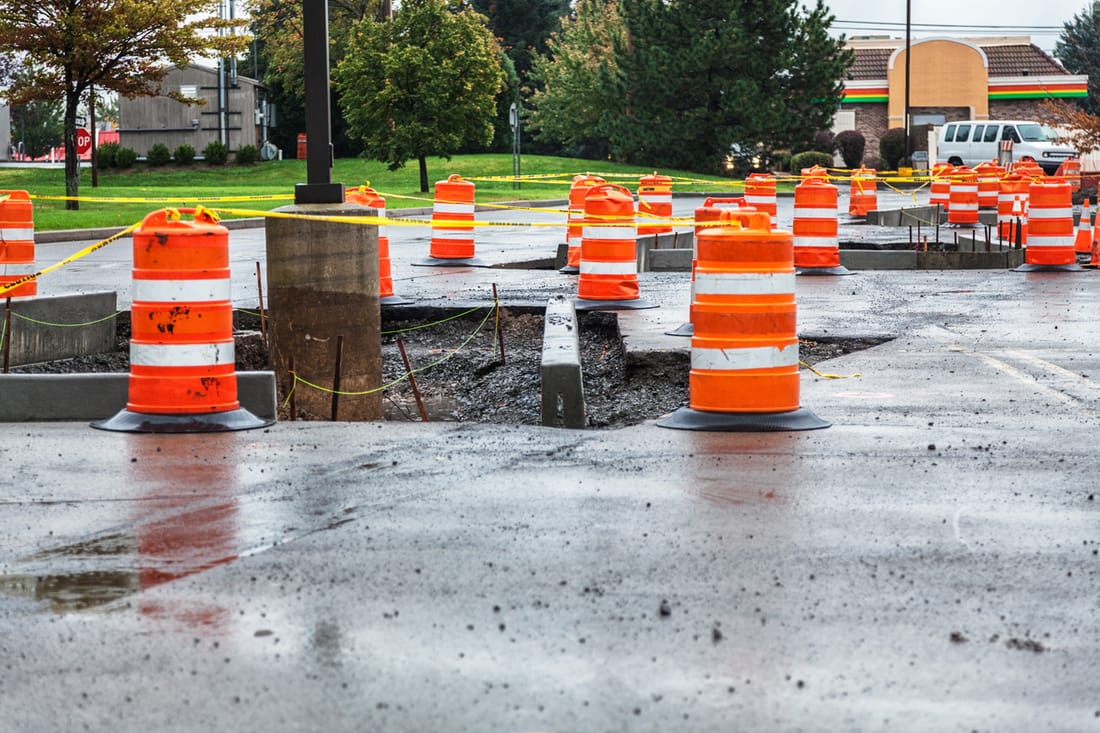
Before work begins, we coordinate with your property manager or business owners on timing, traffic control, and tenant notices. On active sites, we use cones, barricades, and clear signage to separate construction zones from customer parking and walking paths.
During the project, your point of contact will keep you updated on progress, weather-related adjustments, and any hidden conditions we uncover, such as unsuitable soils or buried structures. We address small plan changes quickly so the project does not drag on.
After paving, we handle striping, signage installation or replacement, and final cleanup. We also review basic maintenance steps with you, such as when to schedule the first sealcoat, how to manage de-icing in rare Atlanta cold snaps, and what kinds of heavy equipment traffic should be controlled to protect your investment.
Our focus is on delivering a parking lot that looks professional, handles real-world Atlanta traffic and weather, and minimizes your long-term repair headaches.