Home › Parking Lot Sealcoating & Maintenance
Precision Asphalt Atlanta offers parking lot sealcoating in Atlanta, GA to extend the life of your commercial asphalt. Our maintenance programs include crack sealing, sealcoating, and minor repairs to slow deterioration. A fresh coat of sealer improves appearance and shields against UV, water, and chemicals. Keep your asphalt investment performing and looking its best with scheduled commercial sealcoating and maintenance.
Precision Asphalt Atlanta provides professional parking lot sealcoating throughout Atlanta, GA, Georgia and the surrounding area. Our licensed, insured crew delivers safe, clean, on-time work with a free estimate before anything begins. Call (470) 683-6069 or request your free quote.
Parking lot sealcoating that is built for Atlanta traffic and weather
Parking lots in Atlanta take a beating from heavy traffic, UV exposure, and sudden thunderstorms. Precision Asphalt Atlanta designs parking lot sealcoating specifically for our climate and traffic patterns, not a one-size-fits-all mix. Our goal is simple: lock moisture out of the pavement, keep the asphalt flexible, and protect the markings that guide your customers and tenants.
On a typical project, we start with a walk-through of your lot, note drainage issues, ponding, raveling (loose rock), oil-saturated spots, and trip hazards. We also look at how your property is used: delivery truck routes, rideshare pickup areas, and busy entry points off streets like Peachtree Road or Cobb Parkway. All of this affects how we schedule work and how many coats of sealer we recommend.
For most commercial properties in Atlanta, Precision Asphalt Atlanta uses a refined coal tar or asphalt-based sealer blended with water, sand, and additives for flexibility and skid resistance. We adjust the mix for your specific lot. High-turn areas such as drive lanes near the building or dumpster pads often get a heavier sand load and, in some cases, an extra coat because they wear out first. By tailoring the mix, we can stretch the life of your pavement rather than just make it look black for a year.
Step-by-step: how Precision Asphalt Atlanta sealcoats your parking lot
Effective parking lot sealcoating is about preparation as much as it is about the sealer itself. Precision Asphalt Atlanta follows a consistent process so you know what you are getting.
1) Inspection and planning: We inspect the lot, measure square footage, document damaged areas, and review your business hours. For retail and medical facilities around Atlanta, we often phase the job so part of the lot stays open while another section cures.
2) Cleaning and surface prep: We use power blowers, mechanical brooms, and wire brooms to remove loose gravel, dirt, and vegetation. Oil spots are treated with oil primers, not just sprayed over, because sealer will not bond to fresh oil. If there is heavy buildup from Georgia red clay along edges or in low spots, it is scraped or swept out so the sealer can reach the asphalt.
3) Crack sealing and minor repairs: Active cracks are routed where appropriate, then filled with hot rubberized crack sealant. This step is essential in Atlanta because of our temperature swings that cause expansion and contraction. Alligatored areas, which look like cracked glass, are flagged. Those should usually be patched or milled and replaced instead of just coated, and we tell you the truth about where sealing alone is not the right fix.
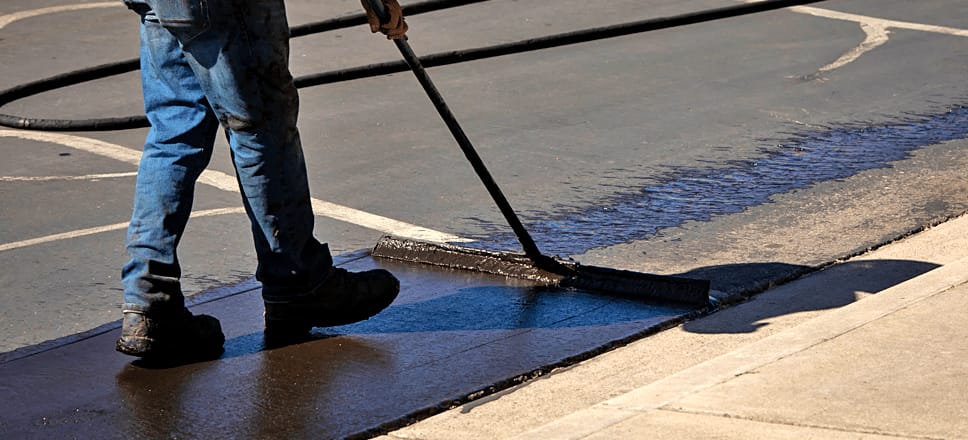
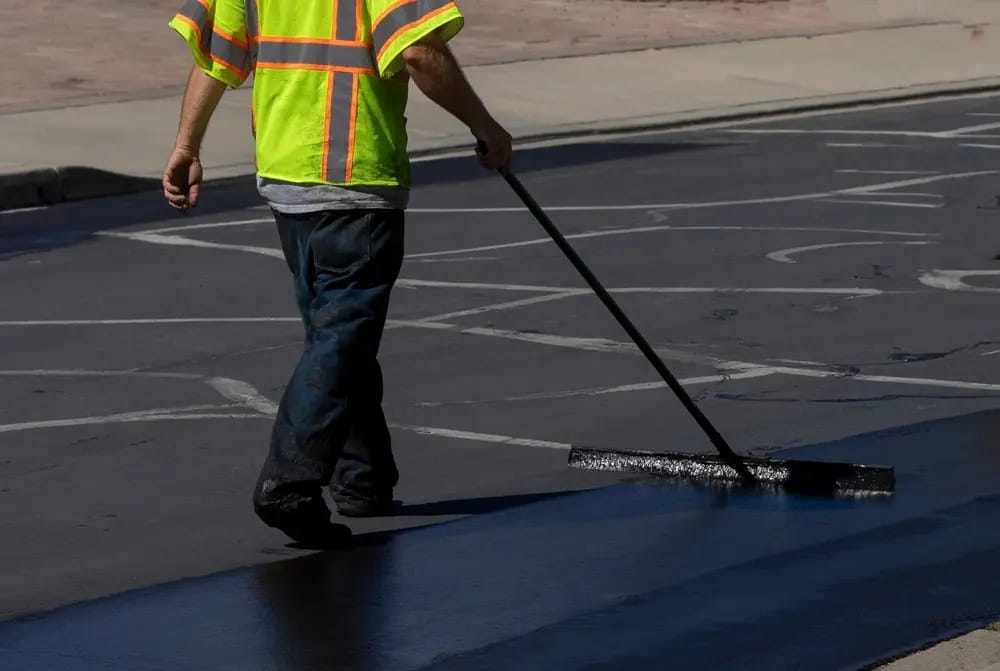
4) Sealer application: Once the surface is clean and dry, we apply sealer by either spray, squeegee, or a combination method. Squeegee application forces material into the pores of older, more oxidized asphalt. Spray application provides a smooth finish and even coverage on newer pavement. Most commercial lots receive two coats, with extra attention to high-traffic lanes and entrances from major roads.
5) Striping and reopening: After the sealer has cured, we restripe parking spaces, ADA stalls, crosswalks, fire lanes, and directional arrows. We follow Georgia ADA layout requirements for accessible stalls and access aisles. Only after the paint flashes off and the sealer has enough cure time do we remove barricades and reopen the lot.
What affects cost and scheduling for parking lot sealcoating in Atlanta
Many customers want to know why pricing can vary from one property to another. Precision Asphalt Atlanta is transparent about the main cost drivers for parking lot sealcoating.
First, overall square footage and layout matter. A wide-open commercial lot is faster and more efficient to sealcoat than a tight, chopped-up layout with several islands and cart corrals. More edges and obstacles mean more hand work, which adds time. Second, condition matters. If your lot has heavy crack density, failed patches, or large oil-saturated areas under dumpsters or drive-thru lanes, more prep and material will be needed.
Traffic control and scheduling are another major factor. Properties along busy corridors in Atlanta often require weekend or overnight work so customer access is not disrupted. If we need to stage the project in multiple phases to keep sections open for tenants, barricades, flaggers, and extra mobilizations affect the cost. We work with you to balance budget with business continuity so you know exactly how many days the work will take and what will be closed when.
Material choices also play a role. Coal tar sealer typically offers more chemical resistance, which is valuable around gas stations and restaurants with lots of oil and fuel drips. Asphalt emulsion sealer has a milder odor and is sometimes preferred near medical offices, schools, or residential communities. We explain the pros and cons of each, along with expected lifespan, so you can make an informed decision instead of just picking the cheapest line item.
Finally, timing with Atlanta weather matters. Sealcoat should not be applied right before a thunderstorm or during extended cold, damp stretches. We watch local forecasts closely and schedule around rainfall and temperature so you do not end up with tracking, wash-off, or soft spots that fail early.
Maintenance plans that keep your parking lot out of “emergency mode”
Waiting until your parking lot looks gray and cracked is the most expensive way to manage pavement. Precision Asphalt Atlanta helps property managers build a practical maintenance plan so you can budget ahead and avoid surprise capital expenses.
For most Atlanta properties, a good schedule is sealcoating every 3 to 4 years, with annual crack sealing and touch-up striping as needed. High-volume retail centers or apartment communities along busy corridors might lean closer to 2 to 3 years, while lightly used office lots can sometimes go a bit longer between full sealcoat cycles. We evaluate your specific traffic mix, including delivery trucks, transit buses, or tractor trailers that may be cutting across corners.
A maintenance plan typically includes: yearly pavement inspections, prioritized repair lists with cost ranges, crack filling before the winter season, and reserved budget for localized patching in failing areas. This approach lets you fix small issues like edge cracking and early potholes near catch basins before they compromise more of the pavement.
We also address practical items that are easy to overlook, like ensuring your downspouts do not dump water directly onto the lot, and checking that speed bumps, wheel stops, and utility covers are at reasonable heights after each overlay or sealcoat. These small checks reduce trip hazards and complaints from tenants and customers.
By treating your parking lot like an asset that needs regular care rather than a sunk cost, you can often double the life of the underlying asphalt. Precision Asphalt Atlanta documents each visit with photos and notes so you can show ownership or your HOA board exactly what has been done and why.
What Atlanta property owners should know before hiring a sealcoating contractor
Before you hire anyone for parking lot sealcoating, there are a few specific things you should confirm, especially in the Atlanta area.
Ask about surface prep, crack sealing, and oil treatment in writing. If a proposal only mentions spraying sealer, you are not getting a full maintenance service. Precision Asphalt Atlanta spells out cleaning methods, crack repair quantities, and how we handle oil spots in the scope so you know what is included and what is not.
Check that the contractor carries liability and workers compensation insurance, and that they understand local requirements. For example, larger commercial properties and retail centers may need coordination with city inspectors or property management guidelines for barricades, fire lane access, and ADA stall layout. Improper striping that ignores Georgia ADA regulations can create liability issues for owners.
You should also review the planned traffic control. On an active Atlanta site, especially near busy intersections, a contractor should provide clear barricades, cones, and signage, and phase work so emergency vehicles can still reach fire lanes and building entrances. We provide a simple schedule that you can share with tenants or store managers, including closure times, reopening times, and alternate parking arrangements when needed.
Finally, ask about curing time and realistic expectations. In typical Atlanta summer weather, most lots can be reopened to regular traffic after 24 hours, but shaded or low-lying areas may need longer. Heavy trucks should often be kept off newly sealed surfaces for 48 hours to reduce scuffing. We walk the site with you before reopening and point out any areas that need extra time so the work lasts as long as possible.