Home › Walkway and Pathway Paving
Precision Asphalt Atlanta delivers quality asphalt walkway paving in Atlanta, GA, creating safe, smooth paths around your home. We design and install asphalt paths that connect driveways, patios, sheds, and backyard spaces. Our team grades for proper drainage and builds walkways that are comfortable for walking, biking, and strollers. Upgrade worn dirt or gravel paths with durable asphalt sidewalks tailored to your property.
Precision Asphalt Atlanta provides professional asphalt walkway paving throughout Atlanta, GA, Georgia and the surrounding area. Our licensed, insured crew delivers safe, clean, on-time work with a free estimate before anything begins. Call (470) 683-6069 or request your free quote.
Asphalt Walkway Paving Tailored to Atlanta Properties
Walkways and pathways on Atlanta properties take a real beating from heat, humidity, and tree roots. At Precision Asphalt Atlanta, we focus our walkway work on how people actually use their space, not just on pouring blacktop and leaving. Whether you have a narrow side path at a 1940s bungalow in East Atlanta, a curved garden walk in Sandy Springs, or a long access path behind a commercial building near Midtown, we plan the layout and the asphalt mix to match the site.
For asphalt walkway paving, we start with how many people will use it, what will be rolling across it (strollers, carts, light equipment), and how water moves across your property during a storm. A light-use backyard path can use a thinner asphalt section than a walkway that regularly sees delivery dollies or maintenance carts. Atlanta’s clay soils expand and contract, so we pay close attention to base depth and drainage to prevent heaving and early cracking.
If you are replacing an existing concrete or broken asphalt path, we look at what failed and why. Common issues in Atlanta are tree-root lifting from oaks and pines, poor drainage near downspouts, and washouts on sloped lots. By addressing these up front with root barriers, improved grading, or added drains, we create asphalt walkways that stay smooth for years instead of needing patch after every heavy rain.
Our Step-by-Step Walkway and Pathway Paving Process
Every walkway and pathway project follows a clear, predictable process so you know what is happening on your property each day.
1. Site visit and layout: A Precision Asphalt Atlanta estimator walks the route with you and marks the preferred line and width with paint and flags. We check building setbacks, fence lines, existing irrigation, and tree locations. For homes in older Atlanta neighborhoods with tight side yards, we look for the narrowest path that still feels comfortable to walk and can be maintained easily.
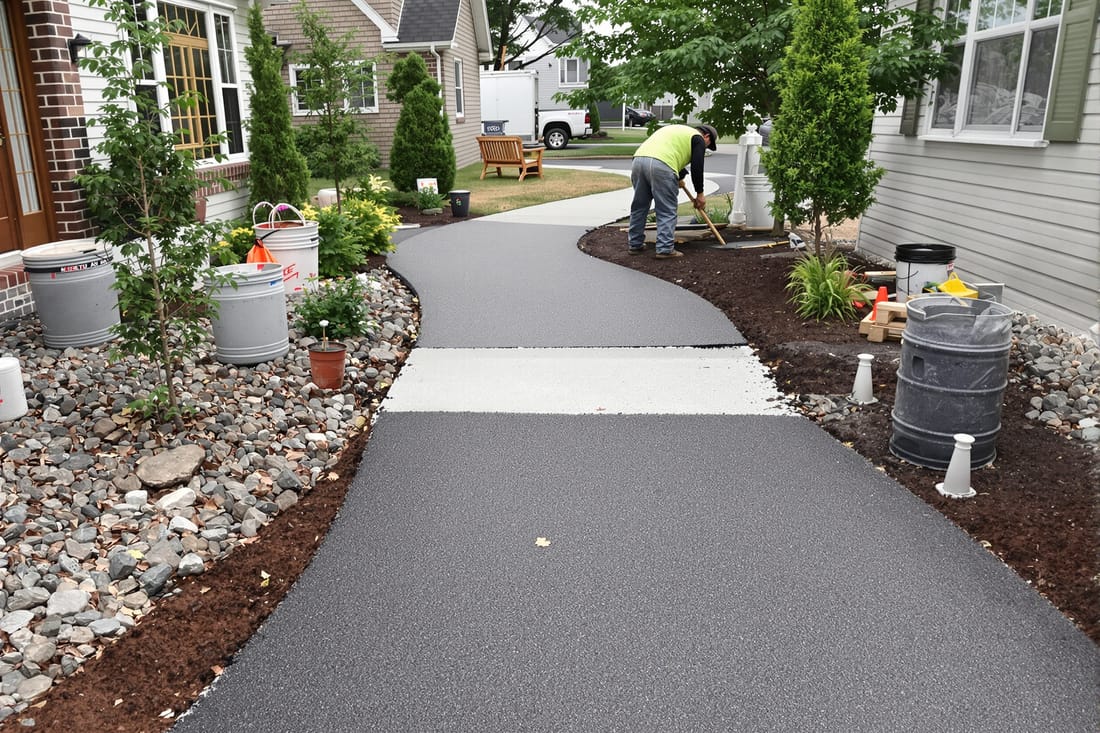
2. Excavation and base preparation: We remove grass, roots, old concrete or asphalt, and loose soil along the path. Depth usually ranges from 5 to 9 inches depending on soil conditions and expected use. We install a compacted crushed stone base, commonly a graded aggregate base suitable for Georgia clay. It is built in layers and compacted with plate compactors so the walkway does not settle in spots.
3. Edge control: To keep edges from crumbling, we install either soil berms, metal edging, or concrete ribbon edges depending on your design and budget. On residential walkways near flower beds, many customers choose steel edging that gives a clean separation between mulch and asphalt. On commercial sites, we often form concrete edges that act as both a border and a small curb.
4. Asphalt placement: We use a hot mix asphalt suitable for pedestrian and light cart traffic. For most walkways we install 2 to 3 inches of asphalt in one lift, compacted to final thickness with a roller and hand tampers around tight spots. On steeper slopes or high-use school or apartment walkways, we may specify a slightly coarser surface mix for more traction and durability.
5. Detail work and clean up: We hand finish around steps, manholes, and transitions to driveways or patios so there are no trip lips. Edges are straightened, loose material is swept away, and we make sure adjoining lawns and beds are clean. You receive clear instructions on when you can walk on the new surface and how to handle the first few days of curing in Atlanta’s heat.
Design Choices for Comfortable, Safe Walkways
Asphalt walkway paving is more flexible than most people realize. You are not limited to a straight, narrow black strip. During planning, Precision Asphalt Atlanta walks through design options that fit how you use your yard or site.
Width is usually the first decision. For a private backyard path, 3 feet wide is common. For front walks, shared apartment paths, or routes that will see two-way foot traffic, 4 to 5 feet is more practical. If you plan to move trash carts, wheelchairs, or lawn equipment along the asphalt, we suggest minimum clearances so you are not constantly running into grass and beds.
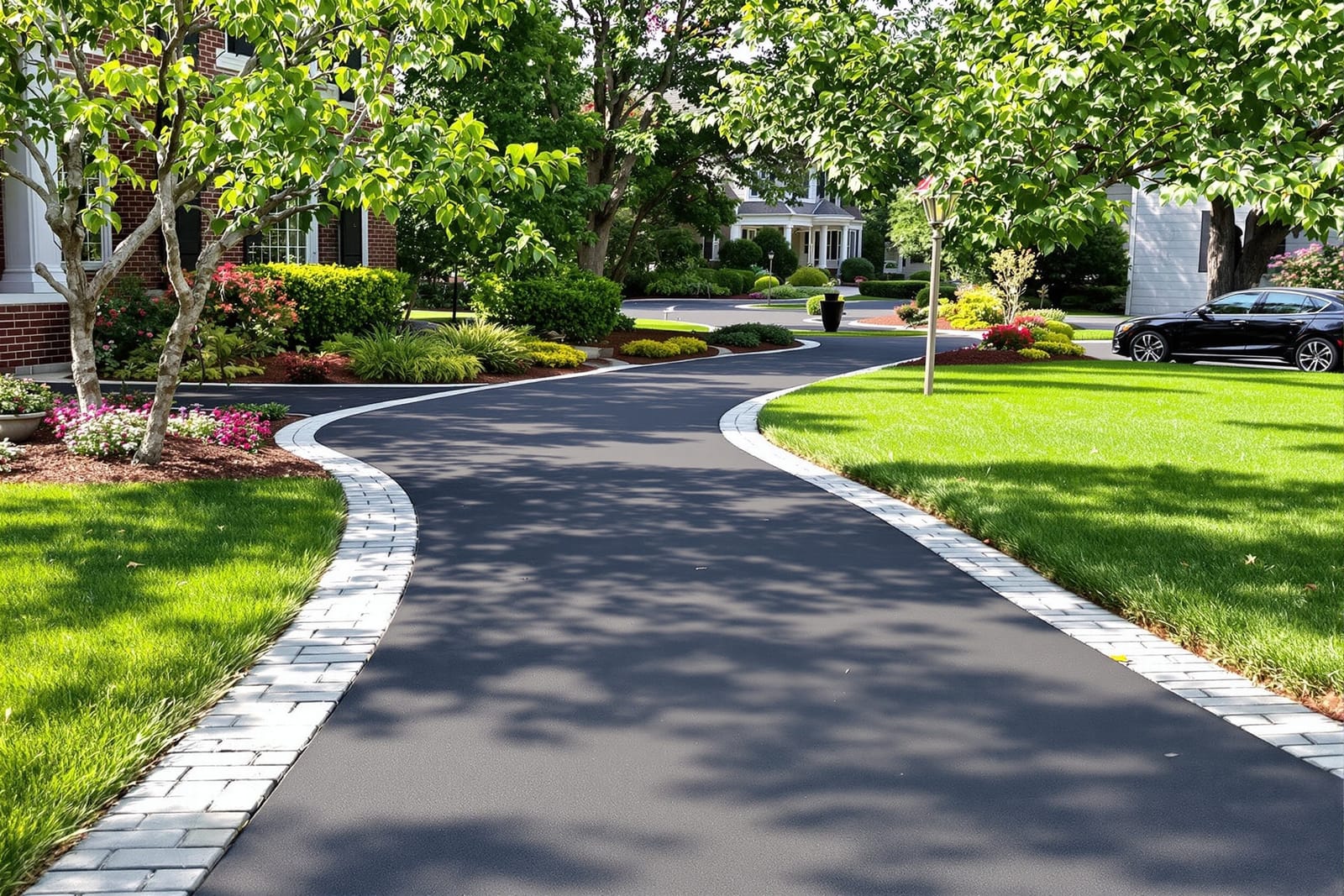
Curves and alignment matter as much as width. Gentle curves are easier to navigate and look more natural in Atlanta’s rolling neighborhoods, especially around mature trees. We keep curves broad enough that runoff still has a clear direction and does not puddle. On hilly lots in areas like Vinings and North Decatur, we may break a steep route into gentle slopes paired with landings or tie the walkway into existing steps for safer access.
Surface texture and color options are also available. Standard asphalt is dark black when new and lightens to dark gray as it ages. For areas that get full afternoon sun, like exposed south-facing side yards, we can discuss seal coat options later that reduce glare and help with temperature. A slightly textured surface provides better grip when Atlanta’s frequent summer storms hit. We also plan for future lighting and handrails on steeper or heavily shaded walkways, leaving clean edges and clear zones where other contractors can easily anchor posts.
What Affects Cost for Asphalt Walkway Paving in Atlanta
Customers often ask why walkway quotes vary so much. The price of asphalt walkway paving is driven by several very specific site conditions and choices, not just a simple per-foot rate.
Length and width are obvious factors, but total project cost also depends heavily on access. In tight Atlanta backyards where equipment has to be brought in through a narrow side gate or down steep terrain, labor time increases because more hand work is required. Removing an old concrete path adds trucking and disposal costs that a fresh, grass-only route does not have.
Soil and drainage conditions matter. Soft or saturated clay requires a thicker crushed stone base and sometimes fabric separation between soil and stone to prevent mixing. Properties that collect water along the planned path may need added drainage features, such as small swales, catch basins, or underdrains. These add to upfront cost but prevent repairs later. In older intown neighborhoods, we often discover buried debris from prior construction, such as brick and rubble, that must be removed before a stable base can be installed.
Tree roots are another Atlanta-specific cost driver. If a route passes near large oaks, pines, or magnolias, there may be extra work to manage roots without harming the tree. This might involve slight realignment of the path, minor root pruning under arborist guidance, or installing root barriers. Skipping this step often leads to lifted and cracked walkways a few years later.
Finally, finishing options influence price. Metal or concrete edging costs more than a basic soil-graded edge but significantly extends the life of the walkway by supporting the asphalt edge. Complex curved layouts, tie-ins to existing steps or porches, and coordination with other trades (irrigation, fencing, landscaping) also affect the final number. Precision Asphalt Atlanta provides itemized estimates so you can see how each choice changes overall cost and decide what is essential versus optional.
How Precision Asphalt Atlanta Protects Your Walkway Investment
Asphalt walkways and pathways can last many years in Atlanta if they are built correctly and cared for modestly. Precision Asphalt Atlanta focuses on a few key details that prevent the common failures we see around the city.
First, we pay attention to transitions. Many trip hazards start where asphalt meets concrete steps, brick porches, or older driveways. We feather these connections so there is a smooth, slight slope instead of a sharp bump. In areas prone to settlement or where old structures already show movement, we may use a slightly thicker asphalt transition or adjust the base to spread loads.
Second, we design for water. The goal is always to keep water moving off your walkway and away from foundations. We build a gentle crown or cross slope into the asphalt and make sure water has somewhere to go, not just to the edge to form a new problem spot. In low spots of larger sites like schools or business campuses, we coordinate with owners to integrate drains so the walkway does not become a channel for runoff.
Third, we advise on simple maintenance. For most residential asphalt walkway paving in Atlanta, maintenance is straightforward. Keep edges trimmed so grass does not creep under and lift the asphalt. Sweep or blow off leaves and pine needles, especially in shaded areas where moisture can sit. Watch for early signs of cracking around tree roots or at edges, and address them with small repairs before they grow.
We also discuss optional sealcoating. While not always necessary for light-use garden paths, sealcoating can help protect heavier-use walkways, such as those at townhome communities and churches, from UV and water damage. We usually recommend the first seal coat after the asphalt has had time to cure, often around a year, then an appropriate schedule after that.
Throughout the project, we keep you informed about timelines, what noise or access limitations to expect, and when each section will be usable. The goal is to leave you with a walkway or pathway that feels natural on your property, drains correctly in Atlanta’s heavy rains, and gives you safe, clean access for many years with minimal hassle.